In today’s world, companies face various risks that can have devastating consequences, such as production interruptions, climatic disasters, epidemics, fires, and explosions. Unplanned downtime costs Fortune Global 500 (FG500) manufacturing and industrial firms alone an estimated 3.3 million hours each year, resulting in a financial loss of $864 billion. Robert Stancombe, from NSI Mobile Water Solutions (part of Nijhuis Saur Industries), emphasizes the importance of implementing a Business Continuity Plan, especially in cases where water plays a crucial role in business operations. This plan is vital to minimize potential damages to production, finances, and reputation.
 Establishing a Business Continuity Plan
Recognising the impact of disruptions on business processes, organisations increasingly prioritise establishing a Business Continuity Plan. The globally recognized ISO 22301:2019 “Business Continuity Management Systems” standard enables companies to ensure continuity during unforeseen circumstances. It is crucial to consider clients’ expectations and establish a plan that allows for a response within acceptable timeframes. Building resilience through a Business Continuity Plan can become a competitive advantage.
 Key Steps to Implementing a Business Continuity Plan
- Assess the potential impact of significant events on your business.
- Plan the response, considering the essential services your business must provide to avoid losing customers and fulfill contractual obligations.
- Test the plan’s effectiveness to ensure it can be executed smoothly during emergencies.
- Invest time and effort into managing risks.
These steps should involve a team from multiple departments to identify potential events that could disrupt business operations and develop effective response strategies. While consultancies specialising in disaster management can provide valuable assistance for high-risk/cost activities, businesses can manage the process internally and collaborate with key suppliers to mitigate risks and establish action plans.
Water Treatment Considerations
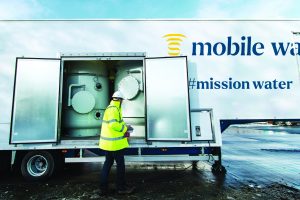
A reliable water supply is crucial for many industrial manufacturing processes. However, water treatment plant operators face constant threats of disruptions due to equipment failures, breakdowns, supply changes, and natural disasters. Mobile water treatment providers offer a solution for quick and efficient response during water emergencies. Temporary water treatment systems can ensure continuous water treatment in various industrial situations.
NSI Mobile Water Solutions, with their ReAct “Treated Water Security” plan, has been offering a free assessment of water treatment requirements, risk identification, and response planning for over 15 years. Businesses that register for this plan receive a comprehensive business continuity audit, providing peace of mind and avoiding costly downtime in case of emergencies.
The audit includes an analysis of water requirements, a review of hoses and connections, an assessment of services and utilities, and the development of a comprehensive Business Continuity Plan. Registered customers receive priority service.
Expertise in “Treated Water Security” – A Real-Life Examples
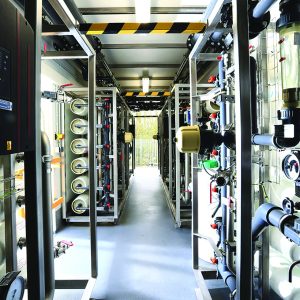
A customer supplying 400,000 tonnes of recycled newsprint annually faced a potential disruption to their newsprint supplies when their water treatment plant experienced a failure. The paper mill’s on-site combined heat and power plant provides steam and power, with the boiler requiring 120 m³/h of water purified through an ion exchange deionization plant sourced from the site borehole. A chemical delivery error forced the steam-raising plant offline until the issue could be resolved, leaving only the reserve feed water tank to supply the boiler, which would run out of water within 24 hours. In adherence to the client’s business contingency plan and as a ReACT registered customer, Mobile Water Solutions quickly activated their treated water security plan. Within hours, they deployed a mobile Reverse Osmosis unit and Ion Exchange system, ensuring a continuous water supply of 120 m3/h without disrupting other production units.
Another case involves a prestigious British car manufacturer. Facing an urgent need for temporary treated water services due to the breakdown of its on-site demineralization plant, which was vital for producing silicon-reduced water for the paint shop, our client turned to us for a swift solution. Activating their ReAct contingency plan with Mobile Water Solutions, we responded quickly to their needs. Over two weeks, we provided emergency water treatment, ensuring uninterrupted production and meeting the required standards for water quality and quantity. Our solution included deploying two skid-mounted ion exchange vessels (MOFI 1200). Our services included rapid implementation, a flexible ‘pay as you go’ rental period, full compliance with health and safety standards without the need for onsite chemicals, and comprehensive service and maintenance support.
Conclusion
Business Continuity Planning should be a priority for all companies. By carefully planning and implementing a Business Continuity Plan, businesses can minimise the potential impact of disasters and ensure resilience. Having a first-aid water treatment plan, such as the ReAct program offered by Mobile Water Solutions, provides peace of mind and fulfills the requirements of ISO 22301:2019 Business Continuity Management Standard.
Contact NSI Mobile Water Solutions to benefit from a free audit :
Email: mws@nijhuisindustries.com