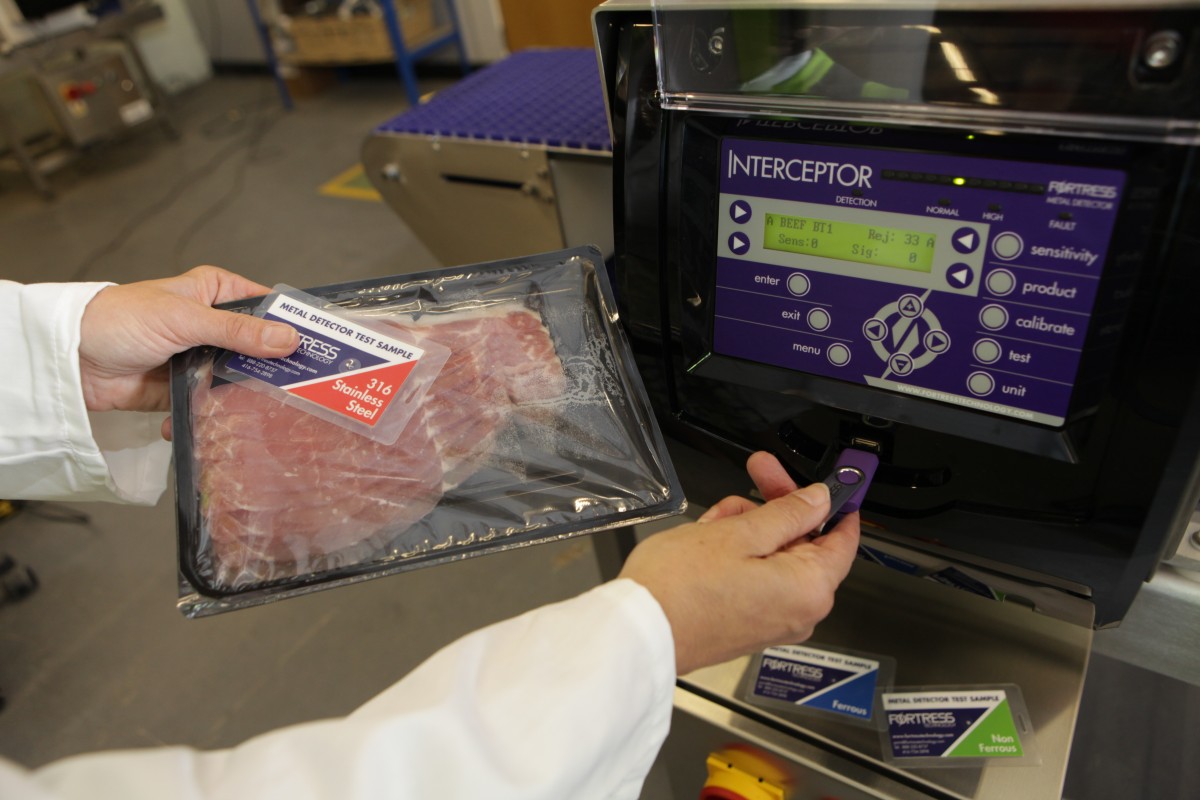
Above: Halo Automatic Testing offers a repeatable methodology to ensure a food metal detector or checkweigher is performing at the optimum level and not wasting good food
Stop Food Waste Day takes place today, 29th April 2026.
Food waste in manufacturing facilities encompasses more than just discarded items ending up in landfill. Inspection imprecisions, operational inefficiencies and time lost to manual documentation contribute to more technical errors, increased processing emissions and higher production costs.
As the world prepares for Stop Food Waste Day on Wednesday 29 April 2026, inspection and food safety expert from Fortress Technology Phil Brown shares guidance for implementing less wasteful practices across the lifecycle of food products. This includes examining how strategic investments in reliable inspection equipment and time-saving digital tools can break the production food waste cycle every day of the year.
Where is waste generated in production?
Globally, over one third of all food produced is discarded. In the UK approximately 16% of this food waste occurs in the manufacturing phase, 19% across Europe[i]. A lot of this waste can be attributed to quality control rejections, processing inefficiencies and packaging issues.
Equipment choices in food production are a critical factor in addressing the high levels of food waste. “Waste in food manufacturing extends to the entire lifecycle of the product. This comprises removing potentially contaminated or out of tolerance products from production lines before they reach the market. Additionally, food manufacturers need to consider every interconnected factor. These can include the carbon and energy emissions that have gone into growing, harvesting and making every product, to water wastage and labour costs,” expands Phil.
In the inspection process, waste can be mitigated at any phase starting at ingredients right up to end of line packaging and labelling. Upstream metal detection, inspecting ingredients at the farm or raw-material stage using gravity or industrial-style conveyor metal detectors, can prevent a domino waste effect. For example, imagine a single soda can discarded in a field of grain. If this can is harvested by tractors and reaches the factory floor it could be shredded into much smaller fragments and could end up contaminating hundreds of food packs.
With metal detectors available for every CCP in food manufacturing, processors can implement a multi-risk contaminant detection strategy across the entire line. Other HACCP-locations include installing metal detectors during processing before packing. These could include pipeline and meat pump metal detectors. Inspection at this CCP is often where the highest metal detection sensitivity is achieved.
Phil clarifies: “The technology selected is always dependent on the most prevalent food safety risks. There is always value to be gained from implementing gravity, pipeline and conveyor metal detectors upstream as this makes it easier to detect and reject metal contaminants in their largest and less expensive forms. Equally, inline metal detection protects expensive food processing machines from unnecessary damage.”
The final metal detection check is generally viewed as the last line of defence. This CCP minimises the risk of metal contaminated food products reaching consumers, making it a standard requirement for food safety programs like BRCGS, GFSI and IFS. In the UK, this final metal detection check is a COP retailer requirement for food products.
The Icon X-ray adapts to variable-density products that present with metal, ceramic, glass and high-density plastic contaminants
For variable density products, Fortress may recommend adding X-ray to the end of the processing line. “Using a proprietary IA+ algorithm, the Icon X-ray’s unmatchable processing and detection power adapts to variable-density products that present with metal, ceramic, glass and high-density plastic contaminants,” Phil.
When too safe becomes wasteful
One of the most insidious contributors to food manufacturing waste is the ‘false reject’. This occurs when good food is flagged as contaminated and sent to the reject bin. This is especially prevalent with ‘wet’ products, such as meat, dairy, ready meals, baked goods or mineral-fortified cereals. These items can create a product effect, where their natural conductivity mimics the signal of metal, tricking standard detectors into playing it safe and rejecting the product.
To pivot from waste to precision, Fortress Technology introduced the Interceptor metal detector. By utilising both high and low frequency ranges to isolate the product signal, the Interceptor metal detector can distinguish between the food’s natural signature and a genuine contaminant. Every gram saved by this technical nuance is a gram that stays in the food chain.
Vepo Cheese installed seven Interceptor metal detectors and introduced an automatic reject system at the same time. Technical Operations Manager at Vepo, Hugo van Put comments: “The automated reject system gives us 100% control over production. There’s less human involvement, therefore less risk of human error. This also lowers the risk of a metal contaminant slipping through the safety net. From an efficiency perspective, continuous production is one of the main benefits.”
Product giveaway represents another significant factor in cumulative loss, often arising when numerous food packs are overfilled by just a few grams. Implementing highly accurate weight control measures is essential to address this issue.
Systems like the Raptor Checkweigher series, which comprises a standalone checkweigher, caseweigher and checkweigher and metal detector combination system utilise advanced ARM processors to record weight data with millisecond precision. Such detailed analytics enable manufacturers to identify deficiencies in real-time. This tightens weight control and ensures precise product distribution in packs, thereby reducing unintended product giveaway caused by technical inefficiencies.
To further reduce waste, multiple checkweighers in a manufacturing facility can be connected to the same secured network. This allows results to be pooled across multiple lines of identical product groups and pack sizes to calculate an average batch weight. A controlled feedback signal can then be sent to the filler to further minimise product giveaway, reducing the need for human intervention.
Following installation of the Fortress Raptor Combination metal detector and checkweigher at Mennel Milling, the team reported zero unplanned downtime during the first 18 months. Specialising in the production and packing of ultra-fine premium grade soft wheat flour, Project Engineer Jonathan Mace cites the simplicity and reliability of the robust combination system as the milling plant’s biggest productivity gamechanger.
Digital solves waste disconnect
The shift toward automation is no longer deemed a luxury among manufacturers but a prerequisite for meeting the 2030 UN and global goal for food loss and waste reduction. Focusing on the ‘Target, Measure, Act’ framework, tracking waste data using digital tools is now regarded as imperative to half food waste within the production process.
Connected inspection machinery allows manufacturers to view equipment status and monitor rejects remotely and in real-time. This networked connectivity provides production managers with the tools to spot trends and patterns, identifying exactly where and when the most rejects are occurring. “Digital tools are increasingly critical for waste management,” highlights Phil.
Additionally, manual testing of food inspection equipment is a massive drain on resources. This can be further complicated by machine position or harsh environmental conditions.
Automated digital testing systems, like the Halo Automatic Testing System, removes the risk of human error or injury from the equation. It independently checks for metal contaminants and ensures the machine is performing without halting production. This isn’t just about saving labour, automatic testing also brings greater transparency and order to the food chain.
Common cultural mindset
Reducing food waste in the food manufacturing sector is not solely a matter of deploying advanced technologies. Cultivating a culture of accountability and shared purpose is equally essential. Teams must understand the origins of food waste, recognise its financial impact and work towards shared goals of minimising it. This collective mindset is the foundation for sustainable change and ensures that waste reduction is prioritised by all.
Building a food chain that is as resilient as it is efficient really is a circular process. When employees are empowered to act on waste data generated by digital tools, the result is a powerful alignment that drives continuous improvement. For example, companies leveraging real-time tracking systems such as networked checkweighers have achieved measurable reductions in product giveaway and unplanned downtime. These technologies not only provide precise analytics but also enable production teams to respond instantly to inefficiencies, reinforcing the value of a proactive and informed workforce.
As the global population accelerates toward an estimated 9.7 billion by 2050, the need for efficient food production and distribution becomes increasingly urgent. Experts project that feeding this population will require a 70% increase in food supply. “Every gram of food saved quite literally reinforces global food security and supports humanitarian objectives. The more united teams are in the effort to reduce good food waste, the more powerful our food industry becomes,” ends Phil.
[i] Eurostat