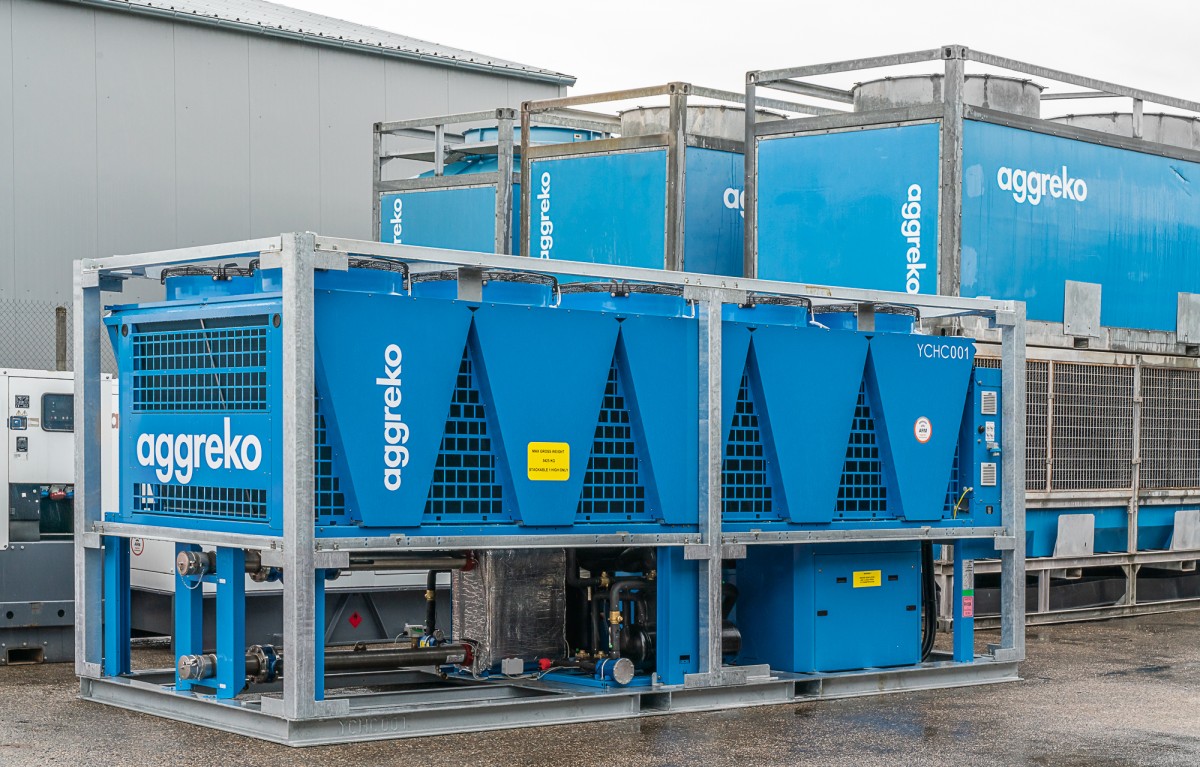
Following warnings from scientists that current climate conditions are brewing extreme weather in the months ahead, engineered energy and temperature control solutions provider, Aggreko, is calling upon process engineers to revise their cooling strategies ahead of time or face the consequences.
Global sea temperatures of 21°C were reported last month – the second highest on record for the month of April – with scientists now pointing to another El Niño warming cycle that could significantly intensify extreme weather.[1]
These temperatures are marginally lower the 21.04°C recorded in April 2024 ahead of the last El Niño weather event, which ended up being the fourth warmest year on record for the UK.[2]

With a long hot summer potentially in store, Chris Smith, Head of Temperature Control at Aggreko, is urging the process industry to review its cooling infrastructure before the heatwave arrives.
He said: “We need only look back at 2024 to see what El Niño might have in store for us this year. Summer temperatures regularly exceeded 30°C, placing immense pressure on process cooling infrastructure and even leading to full-blown equipment failure in worst-case scenarios.
“The reality is, current cooling strategies simply aren’t designed to deal with this kind of weather, or to operate in these temperature ranges. For this reason, now is the time to start reviewing current cooling infrastructure to assess whether it’s still fit for purpose, so the right measures can be brought in ahead of time.
“The main thing to look out for is ageing assets, as these are at the greatest risk of lower efficiency, overheating, and failure. Engaging with a specialist temperature control partner can help implement temporary cooling and industrial HVAC solutions to bridge gaps during equipment failures, manage seasonal demand peaks, and provide N+1 redundancy for greater operational resilience.”
Aggreko’s latest research report, Temperature Check: Is UK Manufacturing Keeping its Cool?, revealed that a staggering 99% of UK manufacturers surveyed had faced downtime in the past 12 month due to cooling equipment failures, with 43% facing more than 3 weeks of downtime.
In the face of this challenge, hybridised packages consisting of battery energy storage systems (BESS) and temporary chillers or cold storage units are becoming an increasingly popular option for the process industry. Here, the chiller or cold storage unit provides scalable, supplementary cooling capacity, with the BESS powering the package while enhancing efficiency, reducing costs, minimising environmental impact, and offering near-silent operation versus a standard generator.
Cave de Lugny, for instance – a large wine co-operative in France – was able to maintain optimal cooling in its cellar throughout the harvest season thanks to a hybrid chiller package from Aggreko, saving 2,660 litres of fuel and reducing on-site CO2 emissions by 40%.
Chris concluded: “While we’ll have to wait and see what the summer has planned for us, now is nonetheless a prime time to re-evaluate cooling strategies and identify where efficiency gains can be made. Procuring temporary cooling from a third-party specialist not only allows access to the latest, high-efficiency technology, but also opens the door to a number of creative solutions, such a hybridisation, which just aren’t feasible in-house.
“While cooling is just one of the challenges that process engineers have to contend with at the moment, the gains this can deliver, alongside the resilience it provides against the threat of outages, mean that this is more than a worthwhile operational solution — delivering flexibility and resilience without the need for capital expenditure, thanks to the hire-based model.”
Read Aggreko’s latest research report, Temperature Check: Is UK Manufacturing Keeping its Cool?
[1] https://www.ft.com/content/e15fc53f-3914-46e1-ab8c-a5de116fa044?syn-25a6b1a6=1
[2] https://www.metoffice.gov.uk/about-us/news-and-media/media-centre/weather-and-climate-news/2025/2024-provisionally-the-fourth-warmest-year-on-record-for-the-uk