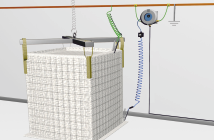
 Helpful Tips for correctly grounding Type C FIBC bags:
- Ensure Type C bags are manufactured in accordance with the electrostatic recommendations of IEC 61340-4-4 / NFPA 77 or CLC/TR: 50404.
- Ensure that the grounding system selected can check and continuously monitor the full range of resistance through the bag.
- Ensure the grounding system not only checks the condition of the bag’s static dissipative threads, but also ensure that the ground circuit includes a direct and monitored connection to a verified True Earth grounding point.
- Ensure the grounding system does not monitor a limited percentage of the permitted range of resistance as they may pass faulty bags and reject acceptable bags.
Type C bags are designed to dissipate static electricity through static dissipative threads that are interwoven through the bag’s material. Grounding tabs located on the bags are points where grounding systems can be connected to ensure static electricity does not accumulate on the bag. To ensure bags destined for use in hazardous areas will not accumulate static electricity to hazardous levels there are several standards that provide guidance on the key parameters to which Type C bags must comply.
The primary standard is IEC 61340-4-4, “Electrostatics – Part 4-4: Standard test methods for specific applications – Electrostatic classification of flexible intermediate bulk containers (FIBC).” This standard was released in the early part of 2012 and it sets out the essential requirements of Type C bags in relation to eliminating the risk of charge accumulation on the bag. It states that the resistance through the bag should be less than 1 x 10⁷ohms (10 meg-ohm). This means that the resistance from a point on the bag to a grounding tab should never be higher than 10 meg-ohm. The latest edition of NFPA 77, “Recommended Practice on Static Electricity”, recommends this value of resistance.
This standard is set to supersede the recommendations contained in the 2003 CENELEC technical report, called CLC/TR 50404 which stipulates a maximum value of 1 x 10⁸ ohms (100 meg-ohms). The latest edition of TRBS 2153:2009 recommends the same value of resistance.
Checking and grounding Type C bags.
When a company wishes to utilise Type C bags they must provide a means for grounding the bag. This can be achieved with either passive (single pole clamp and cable) or active means (monitoring systems), but given the scale of the charge that can build up on bags and the resulting energies that can be reached by static sparks, in combination with the presence of a combustible dust cloud, an active grounding system is the better choice.
This is because the system can determine whether or not the bag’s construction complies with the recommendations of the standards highlighted above and will also ensure the bag is grounded for the duration of the filling / emptying operation. The primary benefit of checking the resistance through the bag is to ensure that after many cycles of repeated use, the static dissipative threads are functioning correctly and, more importantly, to ensure that bags not of Type C construction are not permitted to be used in the hazardous area. Additional benefits with grounding systems are that they can control the movement of the powder through output contacts interlocked with valves or PLCs.
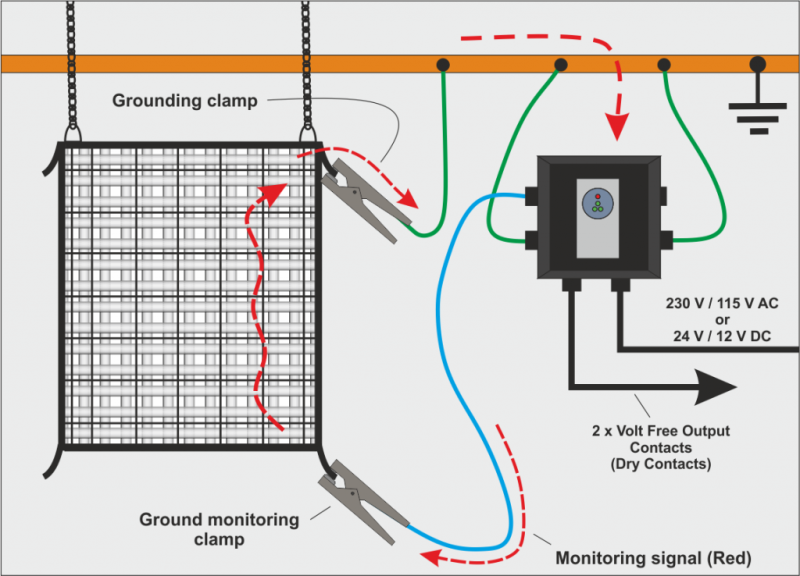
The illustration highlights how a bag can be checked for its static dissipative capability in combination with providing active grounding of the bag. Following the connection of two quick release clamps, the Earth-Rite® FIBC system will identify if the bag is operating in accordance with the relevant standard. This is achieved by sending an Intrinsically Safe (Hazloc approved) signal (red line in the illustration) through the bag. If the green ground status indicators pulse continuously, the operators know the bag is grounded. The system verifies the grounding of the bag by ensuring the signal returns via a verified true earth ground. If there is any charge on the bag it will leave the bag via the static dissipative threads to the verified ground. If the output contacts are interlocked with the process then the material cannot flow without the permission of the operator.
To read the full article on how to correctly ground your FIBC bag please click here.