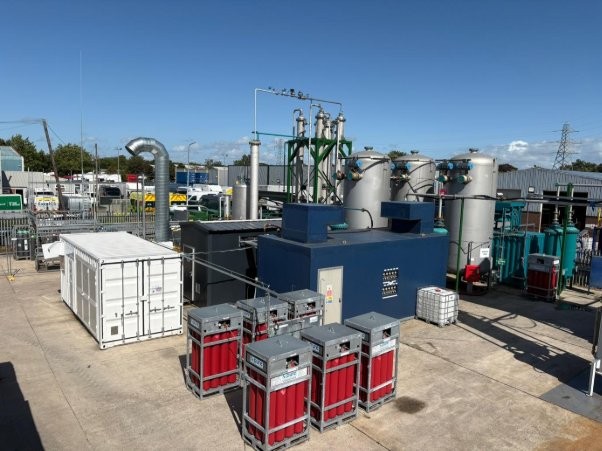
● Compact Syngas Solutions (CSS) has proven its ground-breaking hydrogen and carbon capture technology – opening the door to a new class of low-carbon, waste-to-energy plants
● A £4 million project funded by the Department for Energy Security and Net Zero has concluded successfully with 1,000 hours of CO2 scrubbing completed across multiple 100-hour runs
● CSS, based in Deeside, north Wales, proved its technology could capture over 90% of carbon using water instead of toxic chemicals
● The company’s innovative gasification method dramatically reduces carbon emissions compared with conventional incineration and landfill of waste
● A 1MW commercial plant would produce 25kg of hydrogen and 650kW of electricity per ton of waste feedstock, and captures carbon both in the biochar and via water-based CO2 scrubbing
● The CSS MicroHub caters to the waste, transport and power industries – producing hydrogen from waste while reducing carbon emissions.
Clean energy pioneer Compact Syngas Solutions (CSS) has unveiled the next generation of waste-to-energy plants following the successful completion of a £4 million government-funded demonstration project.
The new MicroHub plant, developed as part of the Department for Energy Security and Net Zero’s (DESNZ) Hydrogen BECCS Innovation Programme, produces hydrogen and electricity from biogenic waste while capturing carbon emissions using water scrubbing.
Unlike traditional methods that use chemical solvents like amines, CSS’s system uses water to remove carbon dioxide from syngas, which is a safer and more sustainable solution.
During trial runs, the plant captured over 90% of CO₂ from the syngas, exceeding the 75% target. Across more than 1,000 operating hours – including multiple 100-hour continuous runs – the system demonstrated stable, scalable performance, advancing the technology towards Technology Readiness Level (TRL) 7.
CSS’s process turns non-recyclable waste and refuse-derived fuel into hydrogen-rich syngas. After cooling, filtering, and scrubbing, the syngas is processed into clean hydrogen — with carbon captured in both solid biochar and gaseous form.
A carbon lifecycle analysis confirmed that hydrogen produced by CSS’s system meets and exceeds the UK Low Carbon Hydrogen Standard, with some configurations delivering net-negative emissions. The results open the way to scaling the plant into a commercial model.
A commercial-scale MicroHub — using eight of the company’s larger Gasifier 1000 units — could serve waste and transport sectors, producing both hydrogen and electricity at the community level while slashing carbon emissions from incineration and landfill. This system could produce five tons of hydrogen per day of more than 99% purity from 200 tons of waste.
The technology will be key to helping the UK reach its Net Zero 2050 target. The production of low carbon hydrogen from waste materials stops it reaching landfill and creates a fuel that has very low greenhouse gas by-products.
This project has received funding from the government’s £1 billion Net Zero Innovation Portfolio, which provides funding for low-carbon technologies and systems. Decreasing the costs of decarbonisation, the Portfolio will help enable the UK to end its contribution to climate change.
Paul Willacy, CEO of Compact Syngas Solutions, said: “This is an incredible breakthrough for the waste-to-energy sector. We’ve proven our clean hydrogen process works at scale, getting real results from real waste — and we’ve done it with water, not harmful chemicals.
“The support from DESNZ has helped us to create a cleaner plant that turns waste into green hydrogen and clean electricity while capturing carbon.
“We’re already showing transport and logistics companies how we can reduce their fuel costs, and talking to industrial businesses about how they can decarbonise their processes.
“Our MicroHub model can help communities generate their own energy, reduce landfill and make real progress toward net zero.”