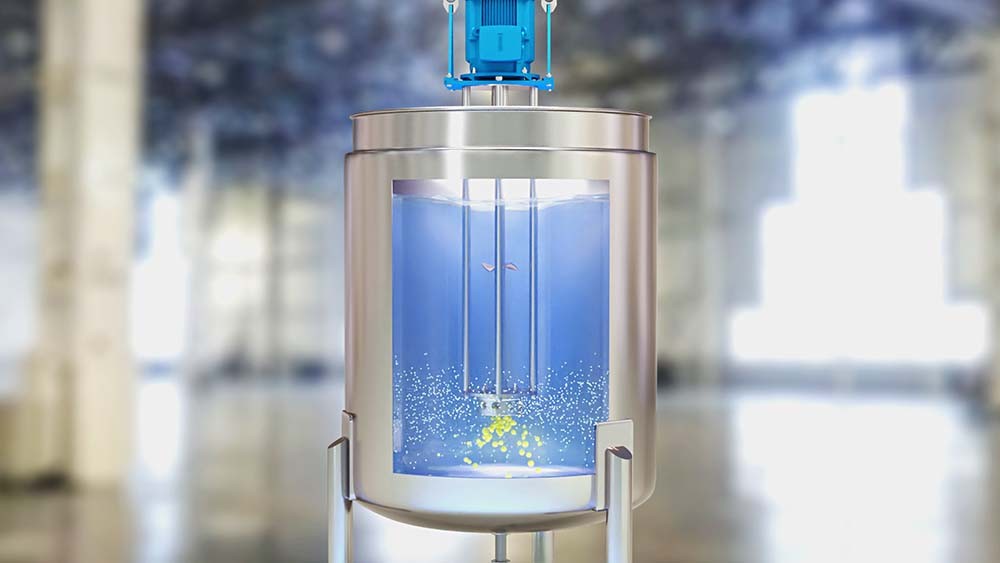
The Mixing Science series produced by Silverson Machines uses animations to explain and demonstrate a range of mixing topics and terms such as Homogenisation and Emulsions.
The latest animation to be released in the series explains the pumping capacity of high shear In-Line mixers. When mixing continuously in larger batches, In-Line mixing is often the method chosen by manufacturers to get the best results; it also offers greater energy efficiency over in-tank mixers as the mixer’s effort is concentrated on the small volume in the mixing chamber rather than having to circulate the entire volume in the tank.
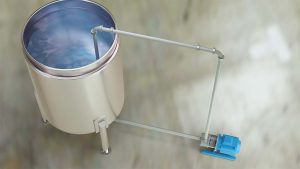 But although Silverson In-Line mixers are self-pumping, some people think that they will need a very powerful machine to recirculate the product back to the top of a large tank. The new animation debunks this by explaining how a Silverson In-Line mixer can recirculate product in a large tank without the need for pumps or additional power.
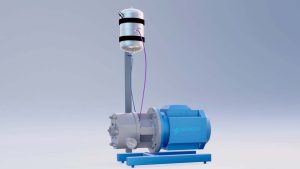
Other videos in the series also focus on seals and sealant systems for Silverson In-Line mixers. One animation explains why some applications require single mechanical shaft seals, and why others require double mechanical seals on In-Line mixers. The mechanical shaft seal contains the mix in the body of the In-Line mixer where the rotating shaft passes through the body. For many applications, a single mechanical shaft seal is all that is required to prevent liquid from leaking out of the mixing chamber.
But mixing materials that are abrasive or sticky in nature can cause problems where a single mechanical seal is being used. Abrasive materials cause the seal faces to wear, and sticky substances can solidify between the seal faces when the mixer is switched off; this can cause the seal rings to seize and break when the mixer is restarted. To avoid this a double mechanical seal would be recommended.
A double mechanical shaft seal can be two single mechanical seals mounted in a chamber or a cartridge seal. The chamber between the seals needs to be flushed with sealant fluid which is compatible with the product being mixed and preferably non-flammable. The pressure inside the double seal chamber must be higher than that inside the mixer. This forces clean, lubricating liquid between the seal faces to cool and lubricate them and prevents any of the product from inside the mixer from getting onto the inboard seal faces.
If you are flushing the double seals with liquid other than mains water, for example, if you are using oil or glycerine, this is where a Thermosyphon system is often required, which is explained in another animation in the series.
 Silverson also offer in-tank mixers and one animation details how to use and get the best results from these mixers. These mixers ideal for a wide range of applications including blending, dissolving, disintegrating, emulsifying, homogenising and powder/liquid mixing and can often far outperform conventional mixers such as stirrers and agitators, cutting mixing times by up to 90%. This animation shows how vessel geometry and the position of the mixer in-tank should be to achieve maximum results.
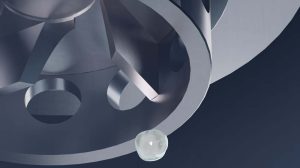
At the heart of every Silverson High Shear Batch mixer is a rotor/stator workhead. It is the high speed rotation of the centrifugal type rotor which draws materials into the workhead – lighter materials which float or raft on the surface of vessels will be drawn down into the workhead and heavier materials that sink to the bottom of the mixing vessel will be drawn upwards. Once the materials enter the workhead they are subjected to intense mechanical and hydraulic shear in the precision engineered gap between the rotor and stator screen. Centrifugal force drives the material out through the holes in the stator and back into the mix, while the rotation of the rotor continues to draw the mixture into the workhead, setting up a circulatory pattern of mixing.
Other animations in the series include explanations of common mixing applications such as emulsions, homogenisation and deagglomeration. One of the most popular videos in the series, ‘What is Homogenisation?’ has almost 200,000 views on the Silverson YouTube channel. As the title suggests, this animation explains what homogenisation is and why it is important to achieve a uniform particle or globule size in many products. Silverson Mixer/Homogenisers can achieve a globule or droplet size in the range of 2 – 5 microns which is sufficient for the vast majority of products including creams, ointments, sauces and pharmaceutical suspensions. Where sub-micron particle size is required a High Pressure Homogeniser would be needed, however a Silverson Mixer/Homogeniser can help to improve the throughput by producing a uniform premix that will allow the high pressure homogeniser to operate more efficiently, reducing process time and costs.
 For more information, or to watch the animations, visit the Silverson website or YouTube channel.