Events such as World Engineering Day, which takes place today, offer a moment of reflection in an industry that relies on being fast-paced. Market pressures, technological shifts and policy changes in real-time all apply a layer of pressure that rarely leaves space for additional considerations. Yet diversity, sustainability and people matters are increasingly intersecting to shape the next generation of industry – or Industry 5.0.
Intelligence embedded in operations
Artificial intelligence is naturally dominating the conversation around engineering. Yet when applying the technology, the conversation must be grounded in strategy and context.

Chris Lloyd, Chief Solutions & Technology Officer at Syspro, explains: “As AI becomes more widely adopted across [the industry], real progress will come from applying it within the deep vertical enterprise systems that already run operations, not alongside them.”
He continues: “In engineering environments, context matters. When AI is embedded within trusted operational context, it can move beyond analysis to support coordinated, explainable and auditable decisions aligned to enterprise goals. That is where the shift becomes meaningful.” Lloyd summarises that, “in complex engineering environments, success will not be defined by algorithms alone, but by how effectively intelligence operates” with this operational context in mind.
The emphasis on context reflects the realities of modern engineering. Decisions carry operational, financial and safety implications. Embedding AI within established systems allows organisations to strengthen performance while retaining accountability and traceability.
Engineering with people at the centre
Whilst technology continues to evolve, the human touch remains the key to success. Representation and early encouragement shape who enters the profession and who ultimately leads it.

Claire Hu Weber, Vice President, International Markets at Fluke, reflects on this from personal experience. “My journey started with curiosity. Building my first PC – an Intel 486 – showed me that engineering isn’t just about technology; it’s about possibility. It connects people, transforms industries, and shapes the future.”
She highlights the importance of diversity for the future of engineering: “Women still make up just 16.9% of the UK’s engineering and technology workforce. That’s not about capability, it’s about opportunity. If we want engineering to power a truly sustainable future, we must widen access to it. Imagine the ideas, creativity and breakthroughs we could unlock if more young women were given that early spark. Engineering builds what’s next. The more talent behind it, the greater the impact.”
Her comments highlight a structural challenge that sits alongside technical progress. The sector’s ability to deliver resilient infrastructure and advanced manufacturing systems is directly linked to the diversity of thinking behind them. Technology like AI simply cannot fulfil its potential without the oversight and understanding of the industry that people can provide.
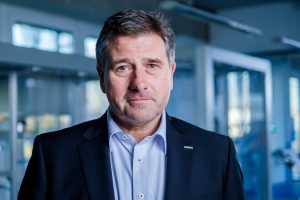
Volker Spanier, Head of Manufacturing Solutions at Epson Europe, echoes the same principle in the context of robotics. “Far from replacing workers, these intelligent systems take on repetitive or hazardous tasks, freeing people to focus on creative, strategic, and value-adding work,” he explains. “This evolution not only enhances productivity but also helps create safer, more inclusive workplaces that attract a wider talent pool into the sector.”
When considered from the perspective that people are driving its progress, technology can enhance human capability rather than displacing it. The opportunity lies in building environments where engineers are supported by intelligent systems.
Sustainability translated into practice
Alongside AI and workforce evolution, sustainability remains a defining priority for the industry.

Mounir Boemond, Director, Sustainability Segment at AVEVA, explains: “The digitalisation of engineering processes is reshaping how we approach sustainability across the energy industry, with data, connectivity, and intelligent modelling now sitting at the core.”
He continues: “Technologies such as digital twins and real-time analytics allow engineers to understand how assets perform over their full life cycle, extending operational life and guiding investment towards lower-carbon choices and extending operational life, while also giving operators the confidence to integrate renewables at scale. This shift highlights how the energy transition continues to evolve, combining traditional problem-solving with digital capability to deliver infrastructure that is both reliable and environmentally responsible.”
A collective moment of recognition
World Engineering Day ultimately provides an opportunity to recognise the breadth of expertise working across the sector. Boemond notes that it’s a day to celebrate “the engineers working across software, data, and field operations, whose collaborative efforts are enabling resilient energy systems and helping organisations to continue progressing steadily through the energy transition.”
As Spanier concludes: “Engineering has always evolved with people at its heart. Today’s sector offers diverse career paths, from engineering and design to data analysis and operations, for those ready to shape the factories of the future. Together, people and technology can build a more sustainable, prosperous, and resilient UK economy.”
Taken together, these perspectives present an industry defined by context: intelligence is becoming embedded within trusted systems, sustainability is being translated into measurable action and human representation remains central to long-term progress. Engineering’s future will be shaped as much by who participates as by the tools they use.